
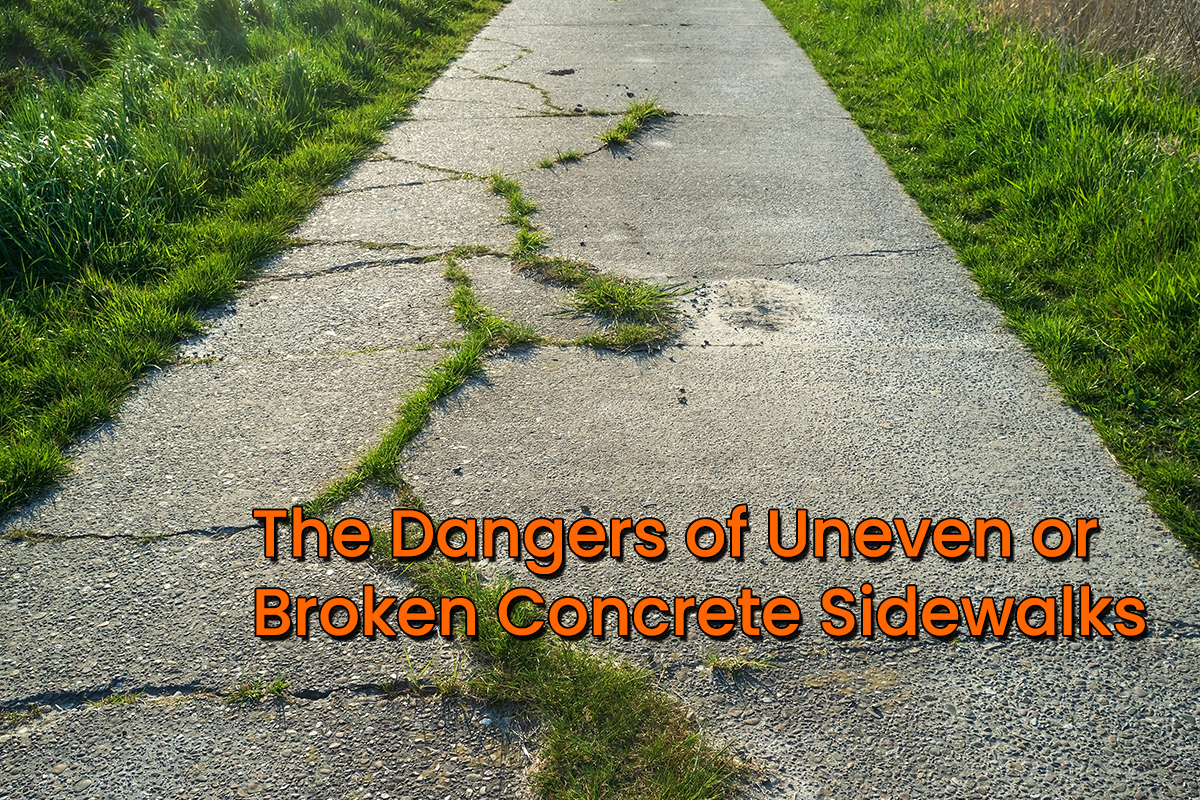
A cracked sidewalk might seem like a small problem at first. Maybe one corner has lifted slightly, a crack has formed between two sections, or part of the walkway has started to sink.
Unfortunately, damaged concrete rarely improves on its own.
Over time, small problems can develop into uneven walking surfaces, standing water, crumbling concrete, and serious trip hazards. For homeowners, addressing these problems early can help protect family members and visitors while improving the appearance and usability of the property.
In many cases, sidewalk replacement is the best way to deal with concrete that has become severely cracked, raised, sunken, or unstable.
If you are wondering whether that uneven sidewalk around your home is really worth worrying about, here are some of the biggest dangers damaged concrete can create.
1. Uneven Concrete Creates a Trip Hazard
The most obvious danger of a broken sidewalk is the risk of someone tripping.
Even a relatively small height difference between two concrete slabs can catch the front of a shoe. This can be especially dangerous for:
- Young children
- Older adults
- People with limited mobility
- Guests unfamiliar with your property
- Delivery drivers
- Anyone walking outside after dark
A walkway may seem easy for you to navigate because you already know where the damaged section is. Visitors do not have that advantage.
Raised slabs, broken corners, large cracks, and sunken sections can all create unexpected changes in the walking surface.
That is one reason sidewalk replacement should not be viewed as only a cosmetic improvement. A smooth, properly installed walkway makes getting around your property safer and easier.
Fed Up Concrete provides concrete sidewalk installation and replacement services for homeowners dealing with cracked, uneven, raised, sunken, or deteriorating concrete.
2. Broken Sidewalks Can Become Worse Over Time
Concrete damage usually develops for a reason.
Common causes of uneven sidewalks include soil settlement, water problems, tree roots, poor base conditions, age, and repeated freeze-thaw cycles.
Once a crack develops, water can enter the damaged area or surrounding soil. As conditions change, movement underneath the concrete may continue.
In Northwest Ohio, changing seasons can make this especially important. Concrete around Toledo and the surrounding communities regularly experiences rain, snow, ice, and freezing and thawing temperatures. Proper preparation and drainage are important for helping exterior concrete hold up under these conditions.
A crack that looks minor today could eventually become:
- A wider crack
- A broken concrete edge
- A raised section
- A sunken slab
- A loose piece of concrete
- A larger trip hazard
Waiting until a sidewalk is severely damaged can also make the area more frustrating to use in the meantime.
When concrete has significant movement or deterioration, professional sidewalk replacement can provide a cleaner long-term solution than repeatedly patching the surface.
3. Uneven Sidewalks Can Cause Drainage Problems
Your sidewalk does more than provide a place to walk. Its slope and position can also affect how water moves around your property.
When sidewalk sections settle or lift, they can create low spots where rainwater collects.
Standing water can create several problems.
It may make the walkway difficult to use after heavy rain, contribute to muddy areas along the sidewalk, and allow more moisture to reach cracks and joints.
During the winter, standing water can become even more troublesome. Water that collects on a low section can freeze, creating a slippery surface on top of concrete that may already be uneven.
If water repeatedly gathers in the same area, that is a good reason to have the sidewalk evaluated.
Fed Up Concrete considers drainage and connection points during the planning stage of sidewalk installation and replacement.
A properly planned new walkway can help provide a smoother transition while directing water more effectively around the property.
4. Damaged Sidewalks Can Make Your Home Look Neglected
Safety may be the biggest concern, but appearance matters too.
Your front sidewalk is often one of the first parts of your property visitors see. It creates the path from the driveway or street toward your front door.
Large cracks, broken edges, old patches, weeds growing through gaps, and uneven slabs can make an otherwise well-maintained home look unfinished.
Replacing damaged concrete can instantly give the property a cleaner appearance.
A new sidewalk can also work well alongside other exterior improvements such as:
- A new concrete driveway
- Updated front steps
- Fresh landscaping
- A new porch
- Decorative concrete
- New exterior lighting
Fed Up Concrete installs sidewalks and walkways that can connect driveways, patios, porches, garages, steps, side entrances, and other areas of a property.
If you are considering several outdoor upgrades, you can also browse the Fed Up Concrete project gallery to see examples of sidewalks, driveways, patios, steps, and other concrete projects.
5. Damaged Concrete Can Make Everyday Tasks More Difficult
Not every danger involves someone falling.
An uneven walkway can simply make your property harder to use.
Think about everything that regularly travels across a sidewalk:
- Strollers
- Wheelbarrows
- Trash cans
- Wagons
- Lawn equipment
- Bikes
- Carts
- Mobility devices
A large crack or significant difference between slabs can turn a simple trip from the driveway to the backyard into an annoyance.
For someone using a wheelchair, walker, cane, or other mobility aid, the problem may be even more significant.
Smooth, level walkways make it easier to move between important areas of your home.
That is one of the biggest practical benefits of sidewalk replacement. Instead of constantly stepping around a damaged area, you get a reliable walking surface designed for everyday use.
6. Temporary Sidewalk Repair May Not Solve the Underlying Problem
Many homeowners initially search for sidewalk repair near me because they hope a cracked or uneven section can simply be patched.
Sometimes it can.
Minor cracks or surface damage may be repairable when the concrete underneath is still stable.
The problem is that sidewalk repair does not always address the reason the concrete moved in the first place.
For example, filling a crack will not necessarily correct:
- A slab that has significantly sunk
- Concrete pushed upward by movement underneath
- A failing base
- Severe deterioration
- Poor drainage
- Multiple broken sections
You may end up repairing the same area again later.
Fed Up Concrete recommends considering replacement when sidewalks have large cracks, uneven sections, sunken or raised slabs, crumbling edges, standing water, trip hazards, surface deterioration, or old patchwork that repeatedly fails.
The condition of the entire sidewalk should be considered before deciding between repair and replacement.
Sidewalk Repair vs. Sidewalk Replacement
So how do you know which option is right for your home?
Sidewalk repair may make sense when the damage is limited and the concrete remains structurally stable and relatively level.
Repair may be appropriate for:
- Small cracks
- Minor surface damage
- Limited cosmetic problems
- Stable concrete without major movement
Sidewalk replacement may be a better option when the walkway has:
- Large or spreading cracks
- Significant height differences
- Raised slabs
- Sunken sections
- Crumbling edges
- Multiple damaged areas
- Standing water
- Severe scaling or flaking
- Repeatedly failing patches
- Major trip hazards
Replacement removes the damaged concrete so the area can be prepared again before the new sidewalk is formed, poured, leveled, and finished.
That gives the contractor an opportunity to evaluate important factors such as the base, slope, drainage, connections, and layout.
What Happens During Sidewalk Replacement?
A professional sidewalk replacement project generally begins with an evaluation of the existing walkway.
Fed Up Concrete's process starts by reviewing the area, layout, access, drainage, connection points, and condition of the current concrete. When replacement is needed, the old concrete is removed and the area is prepared for the new installation. Forms are then positioned to establish the shape and edges of the sidewalk before the concrete is poured, leveled, and finished.
Proper installation matters.
Poor preparation, incorrect slope, or inadequate attention to drainage can contribute to future cracking, uneven areas, or water problems.
The goal should not simply be to replace old concrete with new concrete. The goal is to create a dependable walking surface that fits the property and holds up to everyday use.
Why Local Experience Matters
If you are searching for sidewalk repair near me or a contractor to handle a complete replacement, working with a local concrete contractor has advantages.
Northwest Ohio's changing weather means exterior concrete must handle summer heat, rainfall, snow, freezing temperatures, and repeated freeze-thaw cycles.
A contractor familiar with these conditions can take local weather and property conditions into account when planning the project.
Fed Up Concrete provides residential and commercial concrete work throughout Toledo and surrounding Northwest Ohio communities, including sidewalks, walkways, driveways, patios, steps, garage floors, basement floors, and decorative concrete.
Do Not Ignore a Sidewalk That Is Getting Worse
A small crack does not always mean your entire walkway needs to be replaced.
But when concrete becomes noticeably uneven, sunken, raised, broken, or unstable, ignoring the problem can allow it to become more difficult to use and potentially more dangerous.
Take a walk around your property and look for:
- Raised edges
- Sunken slabs
- Wide cracks
- Loose concrete
- Crumbling corners
- Water collecting after rain
- Areas that are difficult to walk across
- Old repairs that are cracking again
If several of these problems are present, it may be time to consider sidewalk replacement instead of another temporary patch.
Fed Up Concrete installs and replaces concrete sidewalks and walkways for homeowners in Toledo, OH and surrounding areas. If you are fed up with cracked, uneven, or deteriorating concrete, contact Fed Up Concrete for a free quote.
Frequently Asked Questions About Sidewalk Replacement
When should I replace my concrete sidewalk?
Sidewalk replacement should be considered when the concrete has large cracks, significant height differences, sunken or raised sections, crumbling edges, standing water, repeated failed repairs, or obvious trip hazards. Smaller cracks may sometimes be repaired if the surrounding concrete remains stable.
Can an uneven concrete sidewalk be repaired?
Sometimes. The best option depends on why the sidewalk became uneven and how much movement has occurred. Minor damage may be repairable, while severely raised, sunken, cracked, or deteriorating sections may be better candidates for replacement.
What causes concrete sidewalks to become uneven?
Common causes include soil settlement, erosion, water drainage problems, tree roots, poor base preparation, age, and freeze-thaw cycles. Identifying the likely cause can help determine the best solution.
Should I search for sidewalk repair near me or sidewalk replacement?
If the damage is small and the concrete is still level and stable, sidewalk repair near me may be a good starting point. If the sidewalk has major cracks, significant movement, broken sections, or repeated repair failures, ask the contractor whether replacement would provide a better long-term solution.
Is a cracked sidewalk dangerous?
It can be. Cracks, raised edges, sunken sections, and broken concrete can create trip hazards. The risk depends on the location and severity of the damage, but walkways used regularly by family members, visitors, and delivery workers should provide a reasonably smooth walking surface.
Can standing water damage a concrete sidewalk?
Repeated moisture can contribute to problems around damaged concrete, particularly when water enters cracks or collects underneath or alongside the sidewalk. During cold weather, water can also freeze and create slippery conditions. Proper drainage is an important part of planning a concrete walkway.
Can I replace only one section of sidewalk?
In many situations, individual damaged sections can be removed and replaced without replacing the entire walkway. Whether that makes sense depends on the condition, alignment, and stability of the surrounding concrete.
Does Fed Up Concrete provide sidewalk replacement in Toledo, Ohio?
Yes. Fed Up Concrete installs and replaces concrete sidewalks and walkways for homeowners in Toledo, OH and surrounding communities. Services include new sidewalk installation, replacement, walkway installation, damaged concrete removal, forming, pouring, finishing, and additional concrete services.