
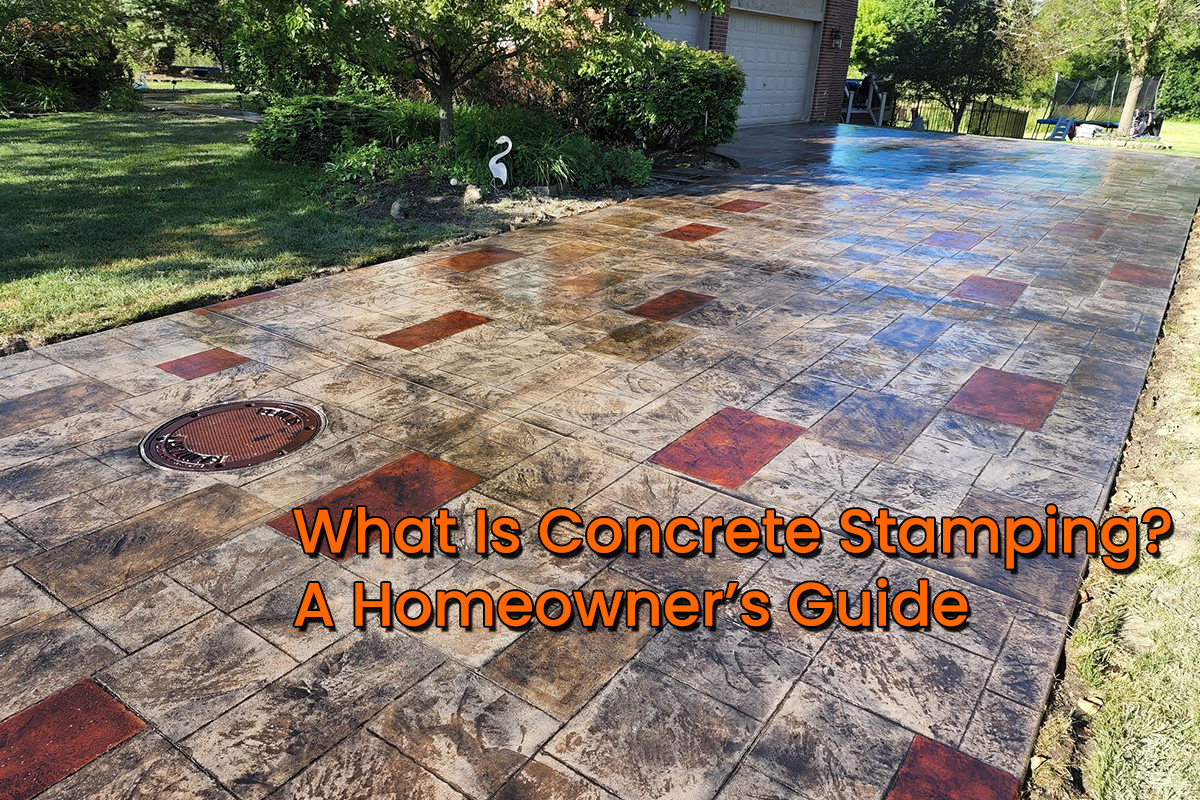
Concrete does not have to be a plain gray slab. With the right pattern, texture, and color, it can become an attractive part of your patio, walkway, porch, driveway, or outdoor living space. One of the most popular ways to create this decorative finish is through concrete stamping.
Concrete stamping allows homeowners to get the appearance of materials such as natural stone, slate, brick, tile, or cobblestone while still using concrete as the primary surface. It gives you a wide range of design possibilities without requiring individual stones or pavers to be installed across the entire area.
So, what is concrete stamping, what does stamped concrete look like, and is it right for your home? Here is what homeowners should know before planning a decorative concrete project.
What Is Concrete Stamping?
Concrete stamping is a decorative finishing process used to press patterns and textures into newly placed concrete. While the concrete is still workable, specialized stamping tools are applied to the surface to create the appearance of another material.
Depending on the pattern selected, stamped concrete may resemble:
- Natural stone
- Flagstone
- Slate
- Brick
- Cobblestone
- Tile
- River rock
- Cut stone
Color can also be added to make the pattern look more realistic and complement the surrounding home, landscaping, or outdoor furniture.
The result is a solid concrete surface with more depth, texture, and visual interest than a traditional smooth or broom-finished slab. Fed Up Concrete offers concrete stamping and coloring services with more than 40 stamping options and hundreds of possible color combinations.
How Does Concrete Stamping Work?
Concrete stamping requires careful timing and planning. The exact process can vary depending on the project, pattern, weather, site conditions, and desired finish, but it generally includes several important steps.
Project Planning
Before the concrete is poured, the homeowner and contractor discuss the size, shape, pattern, color, and intended use of the area. This is also the time to review drainage, connections to existing concrete, furniture placement, steps, walkways, and nearby structures.
For example, a stamped concrete patio may need space for a table, grill, fire pit, or seating area. A decorative walkway may need to connect the patio to a driveway, garage, or side entrance.
Site Preparation and Forming
The project area must be properly prepared before concrete is installed. Preparation may involve removing old concrete, excavating soil, grading the area, preparing the base, and setting forms around the planned shape.
Good preparation is important for both decorative and standard concrete. Stamping changes the appearance of the surface, but it does not replace the need for proper base work, drainage, forming, placement, and finishing.
Concrete Placement and Coloring
The concrete is poured into the prepared area, leveled, and worked into place. Depending on the selected design, color may be incorporated into the concrete or applied as part of the finishing process.
A second accent color may also be used to add contrast and bring out the details in the stamped pattern. This can create darker areas in the joints and low points, making the surface appear more like individual pieces of stone or brick.
Applying the Stamped Pattern
Once the concrete reaches the proper stage, stamping mats or tools are pressed into the surface. The contractor works across the area while maintaining the pattern and alignment.
This part of the process requires experience and attention to detail. The concrete must be firm enough to hold the design but still workable enough to accept the impression.
Final Detailing and Sealing
After the stamping is complete, the surface may receive additional detailing, cleaning, color work, and sealing. A sealer can help protect the surface and enhance the finished color.
The contractor should also explain when the concrete can be walked on, when furniture can be placed on it, and how the surface should be maintained.
What Does Stamped Concrete Look Like?
Homeowners frequently ask, what does stamped concrete look like? The answer depends heavily on the pattern and color combination.
Stamped concrete can have a clean, organized appearance that resembles rectangular pieces of slate or cut stone. It can also have a more natural, irregular pattern similar to flagstone, river rock, or old granite.
Available pattern styles may include:
- Aspen Bluestone Ashlar
- Sedona Flagstone
- Monterey Ashlar
- Belgium Slate
- Random Old Granite
- Castle Stone
- Random River Rock
Color makes a major difference in the finished appearance. Neutral beige, brown, tan, gray, and earth-tone combinations can help the concrete resemble natural materials. Accent colors can provide additional contrast and make the stamped texture more noticeable.
Because concrete is mixed and finished on-site, homeowners should expect natural variation rather than a perfectly uniform manufactured appearance. Reviewing samples and photos can help you understand how different patterns and colors may look when installed. Visit the Fed Up Concrete gallery to see examples of completed concrete work.
Where Can Concrete Stamping Be Used?
Concrete stamping works well in many outdoor areas where homeowners want the strength of concrete with a more decorative finish.
Patios and Outdoor Living Spaces
Patios are among the most popular places for stamped concrete. A decorative finish can help define the backyard and make the patio feel more like an outdoor room.
Stamped patios can provide space for:
- Outdoor dining
- Grilling
- Patio furniture
- Fire pits
- Family gatherings
- Backyard entertaining
Homeowners can choose a design that complements the home’s siding, brick, roofing, landscaping, or other exterior features.
Walkways and Sidewalks
Stamped walkways can create a more decorative route between the driveway, patio, porch, garage, garden, or side entrance. They can also make a standard path feel more connected to the home’s overall design.
Fed Up Concrete installs and replaces concrete sidewalks and walkways, including areas that may connect with patios and other outdoor spaces.
Porches and Entry Areas
A stamped porch or entry area can add texture and interest near the front or back door. Because entrances are highly visible, decorative concrete may help create a more finished first impression.
Driveway Accents
A complete stamped driveway may not be the right choice for every property or budget, but stamped borders and accent areas can add style to a standard concrete driveway. Decorative sections may also be used near the entrance, walkway connection, or parking area.
Homeowners planning a replacement can learn more about concrete driveway installation and discuss whether decorative features are appropriate for the project.
Poolside and Backyard Seating Areas
Stamped concrete may also be used around pools, backyard seating areas, and other outdoor spaces. The selected texture and finish should be discussed carefully with the contractor, especially in areas that are frequently wet.
What Are the Benefits of Concrete Stamping?
Concrete stamping gives homeowners several design and practical advantages.
More Design Choices
Standard concrete provides a clean, practical surface, but stamping allows you to choose from different textures, patterns, and color combinations. This makes it easier to create a surface that fits the style of your home.
The Look of Other Materials
Stamped concrete can recreate the general appearance of natural stone, slate, brick, or tile. It provides that decorative look while maintaining a concrete base underneath.
A Continuous Surface
Unlike individual pavers, stamped concrete is installed as a continuous concrete surface. You do not have numerous separate pieces shifting independently or wide joints where weeds may become established.
Concrete can still develop cracks, however, and no contractor should promise that a concrete surface will never crack. Proper preparation, joint planning, installation, and maintenance can help support long-term performance.
Customized Outdoor Spaces
Concrete stamping can help a new patio or walkway feel intentionally designed rather than added as an afterthought. Pattern, color, size, shape, and layout can all work together to create an outdoor space that fits the property.
Improved Curb Appeal
Decorative concrete can add character to visible areas around the home. A stamped walkway, porch, patio, or driveway accent can create a more finished appearance and improve how the property looks from the street or backyard.
Does Stamped Concrete Require Maintenance?
Stamped concrete is relatively easy to maintain, but it is not maintenance-free. Regular cleaning can help prevent dirt, leaves, and other debris from building up on the surface.
Stamped concrete is also commonly sealed. Sealing can help protect the surface and enhance the appearance of its colors. The frequency of resealing depends on weather exposure, traffic, surface condition, and the type of sealer used.
Homeowners should ask their contractor about:
- Recommended cleaning methods
- When the concrete can first be used
- Whether and when resealing is recommended
- Products that should be avoided
- Winter care and snow removal
- How to handle stains or surface wear
Avoid using harsh products or aggressive equipment without first confirming that they are appropriate for decorative concrete.
Is Stamped Concrete Right for Your Home?
Stamped concrete may be a good choice when you want a durable outdoor surface with more style than traditional gray concrete. It is especially well-suited for homeowners who want to personalize a patio, walkway, porch, or outdoor gathering area.
Before selecting it, consider your budget, preferred design, maintenance expectations, surrounding materials, and how the area will be used. A reputable contractor should help you compare decorative and standard finishes without pressuring you into an option that does not fit your home.
When searching for stamped concrete near me, look for a contractor who can show examples, explain the available patterns and colors, review the site in person, and provide a clear estimate. Decorative concrete requires careful timing and finishing, so experience matters.
Fed Up Concrete provides concrete stamping, coloring, sealing, and restoration for homeowners in Toledo, Ohio, and surrounding communities. Review the Fed Up Concrete service area to learn more about local availability.
Bring More Style to Your Concrete
Concrete stamping can turn a functional surface into an attractive part of your home. With the right pattern, color, layout, and installation, stamped concrete can create the appearance of stone, slate, brick, tile, and other decorative materials.
Whether you are planning a new patio, walkway, porch, or decorative driveway accent, Fed Up Concrete can help you review your options and select a finish that works for your property.
Ready to discuss your project? Contact Fed Up Concrete to request a free quote for concrete stamping near Toledo, OH.
Frequently Asked Questions About Concrete Stamping
Is stamped concrete real concrete?
Yes. Stamped concrete is concrete that receives a decorative pattern and texture during the finishing process. The stamping changes the surface appearance, but concrete remains the primary material.
What does stamped concrete look like?
Stamped concrete can resemble natural stone, slate, brick, cobblestone, tile, river rock, or other materials. Its final appearance depends on the selected pattern, base color, accent color, layout, and sealer.
Can concrete stamping be used on an existing slab?
Traditional concrete stamping is generally performed while newly placed concrete is still workable. Existing concrete may qualify for other restoration, coloring, sealing, or decorative options depending on its condition. Severely cracked, sinking, or crumbling concrete may need to be replaced.
Where is stamped concrete commonly installed?
Common areas include patios, porches, walkways, backyard seating areas, poolside areas, driveway accents, and other decorative flatwork.
Does stamped concrete need to be sealed?
Stamped concrete is often sealed to help protect the surface and enhance its color. Sealing needs vary according to the finish, traffic, exposure, weather, and condition of the concrete.
Is stamped concrete slippery?
Some stamped patterns and sealers may feel more slippery when wet. Discuss where the concrete will be installed and how the area will be used so the contractor can recommend an appropriate texture and finish.
How much does stamped concrete cost?
The cost depends on the project size, site preparation, access, pattern, color choices, concrete removal, layout, and other installation details. Requesting an on-site estimate is the best way to receive accurate pricing for your property.
How do I find stamped concrete near me?
Search for a local concrete contractor with decorative concrete experience, project photos, clear estimates, and knowledge of stamping and coloring. Homeowners near Toledo, OH, can contact Fed Up Concrete to discuss available decorative concrete options.